
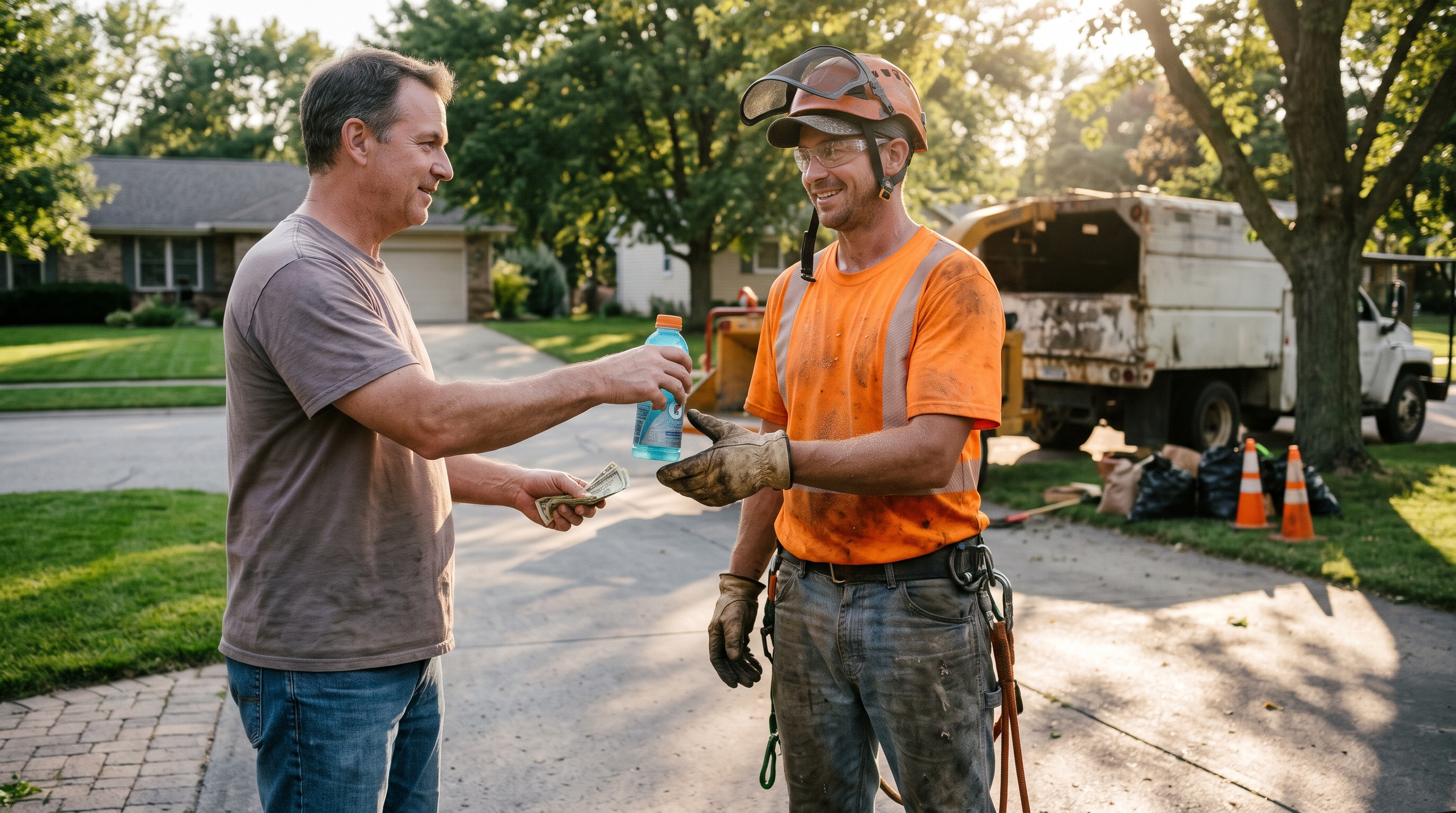
When a tree crew pulls up to your house with a bucket truck, chipper, and four crew members in hard hats, you are usually looking at an invoice in the thousands of dollars. As the day winds down, the limbs are chipped, the yard is raked clean, and the lead climber walks up with a clipboard to collect a final signature. That is when the awkward question hits many homeowners: am I supposed to tip these guys?
Tipping culture in the United States has expanded into almost every transaction, creating confusion around skilled trades. Many homeowners wonder whether tree work follows restaurant rules, whether a percentage is expected, or if handing over cash feels out of place.
Here is how tipping actually works in the residential tree care industry, what crews appreciate, and realistic guidelines if you choose to give extra.
Are you expected to tip tree removal workers?
The short answer is no. Tipping is neither expected nor customary in the tree care trade.
Unlike restaurant servers or delivery drivers who often rely on sub-minimum hourly wages topped up by customer tips, professional tree workers are skilled trade laborers. They earn hourly wages, specialized hazard pay, or day rates negotiated with their employer. When a company calculates your quote, their labor overhead, workers' compensation insurance, and crew pay are already factored into the total price.
No reputable arborist will think less of you or do a substandard job if you simply pay the agreed contract price upon completion.
At the same time, tree work is one of the most physically demanding and hazardous jobs in the country. Climbers spend hours strapped in harnesses fifty feet in the air, handling heavy running chain saws, while ground crews drag thousands of pounds of brush, rake lawns, and feed wood into loud, dangerous chippers under direct summer sun or in freezing winds. Because of that physical intensity, many property owners choose to offer a tip as a personal gesture of gratitude for exceptional effort.
How much should you tip if you choose to?
If you search online, you will occasionally see generic advice suggesting a 15% to 20% tip based on the total bill. In tree removal, that advice is completely unrealistic.
If you are paying $3,500 for a large crane removal or hazardous pine takedown, a 20% tip would mean handing over $700 on top of your invoice. Nobody in the tree trade expects anything close to that.
Tipping in skilled home services is always calculated as a flat dollar amount per worker, never as a percentage of the contract.
For standard half-day jobs such as basic canopy pruning or taking down a small ornamental tree, homeowners who choose to tip typically give $10 to $20 per crew member.
For difficult, full-day removals that involve complex rigging over your roof, hauling wood across tight backyard gates by hand, or working through sweltering 95-degree heat, a common gesture is $20 to $50 per worker.
If the lead climber performed especially dangerous rigging directly above delicate glass structures or fences without causing a scratch, some homeowners give the climber $50 to $100 and give the ground workers $20 to $30 each.
| Job scope | Recommended cash tip per crew member | Notes |
|---|---|---|
| Light pruning or brush clearing | $10 to $15 per worker | Optional gesture for quick, clean work |
| Standard medium tree removal | $20 to $25 per worker | Common for half-day jobs with thorough yard cleanup |
| All-day technical or hazardous removal | $30 to $50 per worker | Appropriate for heavy physical labor or extreme weather |
| Exceptional climber performance | $50 to $100 for the climber | For difficult rigging directly over structures |
When tipping makes the most sense
Homeowners who decide to offer a tip usually do so because the crew went beyond the minimum requirements written on the contract:
When the crew handles miserable weather conditions, such as freezing rain or brutal humidity, an extra cash bonus acknowledging that physical grind is always appreciated.
When the ground crew leaves your property cleaner than they found it. Tree work creates a massive mess of twigs, sawdust, and pulverized leaves. A crew that takes the extra twenty minutes to blow off your roof, sweep your driveway, and rake every loose twig out of your flower beds has saved you hours of weekend cleanup.
When workers do small favors without asking for more money. If a ground worker notices a dead limb hanging over your driveway on a completely different tree and cuts it down for you as a courtesy, or if they take time to buck a thick oak log into neat fireplace rounds and stack them neatly by your woodpile, rewarding that extra effort with a tip makes complete sense.
Non-cash gestures crews appreciate just as much
You do not have to hand over envelopes of cash to show genuine appreciation. In many cases, practical hospitality on the job site is valued even more than a few twenty-dollar bills.
Keep a cooler filled with bottled water, sports drinks, and ice on the driveway. Tree work burns thousands of calories, and crews go through fluids rapidly during summer months. Walking out mid-morning with cold drinks costs very little but immediately boosts crew morale.
Offer lunch. If a crew has been working on your property since seven in the morning and will be there until late afternoon, ordering two or three hot pizzas or picking up sandwiches around noon is one of the most welcome gestures you can make. It saves workers from eating gas-station snacks or packing into their truck to find fast food.
Provide access to a clean restroom. Working on residential properties all day often leaves crews without restroom access, forcing them to find a nearby convenience store. Simply letting the crew know they can use an entryway or garage bathroom makes a substantial difference to their day.
Leave an enthusiastic, detailed online review. If the company owner is not on site, write a 5-star review on Google or their directory profile mentioning the crew members or the job foreman by name. Many company owners award cash bonuses or priority scheduling to workers who earn glowing public customer reviews.
Who to tip and how to hand it over
If you decide to give cash, how you deliver it matters.
Never tip the company owner. If the person running the job is the proprietor of the business, they set the profit margin, own the equipment, and pocket the business profits. Tipping etiquette across all home trades dictates that owners do not receive tips. Save your gratitude for the hourly employees who did the physical climbing and hauling.
Hand the cash directly to each individual worker if possible. Giving a twenty-dollar bill directly to each ground worker and climber ensures that every person gets their share.
If you cannot catch everyone individually before they pack up the trucks, hand the lump sum to the crew foreman and clearly state that it is cash to be divided equally among the crew.
Do not write a tip onto your final check or credit card invoice unless you have specifically confirmed with the office that 100% of that money goes directly into the workers' paychecks without company deductions. Handing cash to the crew at the truck is always the cleaner, more direct option.
The bottom line on tree service tipping
Tipping for tree removal is strictly voluntary. You should never feel pressured, obligated, or embarrassed if you choose not to tip. Professional tree crews take pride in their craft, receive compensation through their wages, and understand that their service is already a significant financial investment for homeowners.
If a crew works safely, treats your property with care, and leaves your yard in spotless shape, offering cold drinks, providing lunch, or slipping the crew members a modest cash tip is a simple way to say thank you for hard, dangerous work.
If you are planning an upcoming project and want to compare transparent, competitive quotes from insured local arborists, you can connect with verified contractors in your area through the TreeRemovalNear.com directory.
Need a Verified Tree Removal Pro in Your City?
Avoid contract delays and unexpected pricing. Search our nationwide directory of licensed, highly-rated tree cutting and stump specialists with verified customer reviews.
Find Contractors Near You →