
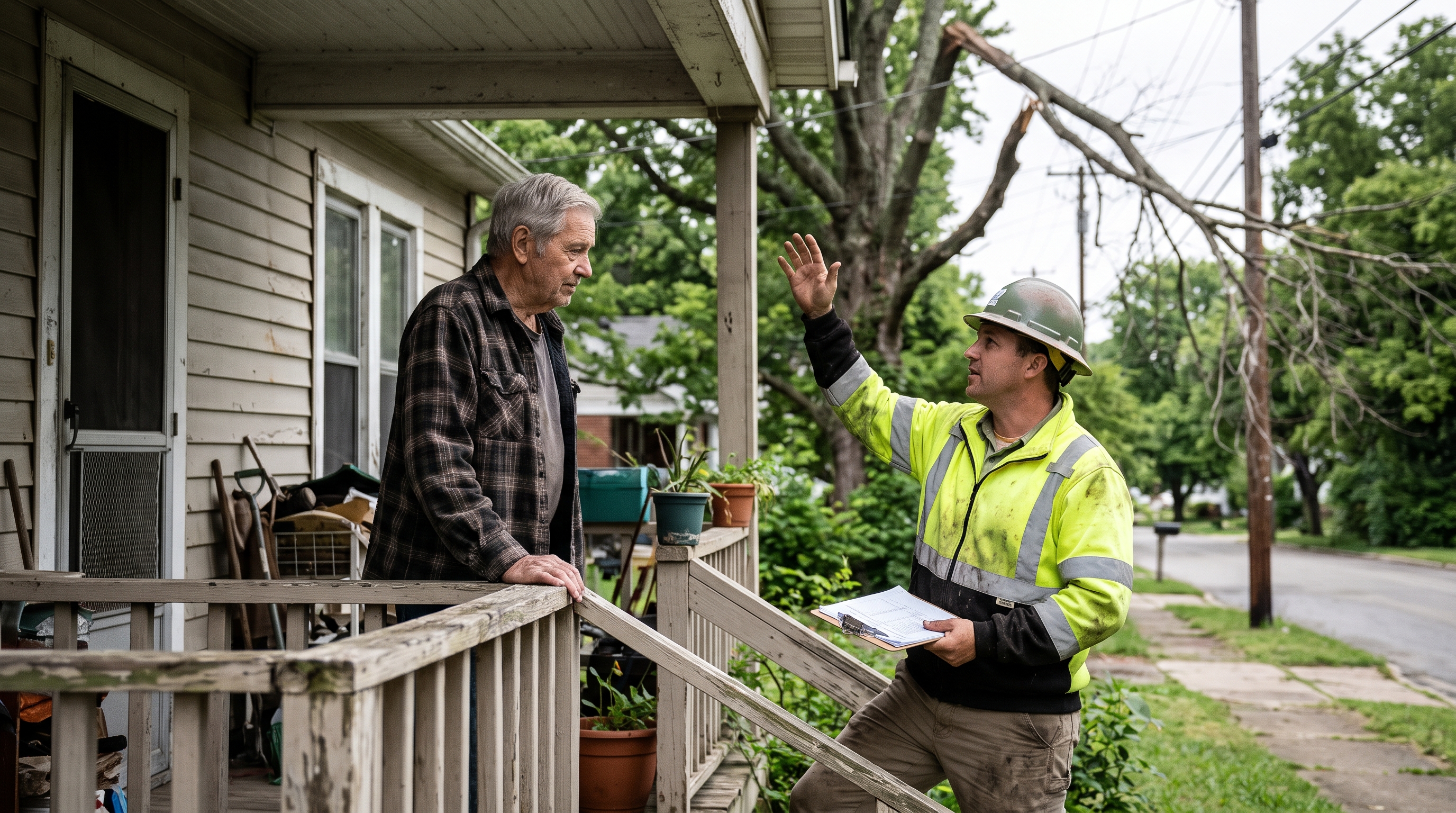
Paying $1,500 to take down a hollow oak is difficult on any household budget. For an older homeowner living on Social Security or a modest monthly pension, an unexpected tree invoice can feel impossible. When a dead branch hangs over a bedroom roof or roots compromise a foundation, ignoring the problem is dangerous, but paying for a full-service arborist crew out of pocket simply is not an option.
There is no single federal website where you click a button and order a free tree removal crew. However, there are legitimate government programs, utility regulations, and community organizations that step in when a tree becomes a documented safety hazard.
Knowing which phone numbers to call and what paperwork to have ready makes the difference between getting assistance and hitting a dead end.
When electric utility companies cut trees for free
Before applying for grants or calling charities, look at where the tree sits in relation to neighborhood power lines. Power companies spend millions of dollars every year clearing trees, not out of generosity, but because fallen limbs on high-voltage lines trigger widespread blackouts, damaged equipment, and fire liabilities.
If a tree trunk is leaning toward a main power distribution line, or if branches are growing directly through the wires along the street, call the electric company listed on your monthly power bill. Ask to schedule a utility line clearance inspection.
Utility companies will send a vegetation management technician to inspect the hazard. If they determine the tree threatens their primary distribution line, their contracted tree crews will prune or completely drop the tree at zero cost to you.
There is an important distinction to keep in mind. Electric utilities are responsible for primary distribution lines running from pole to pole down the street. They are generally not responsible for the individual service line that runs from the street pole to the electric meter on the side of your house. If a branch only touches your personal service line, the utility will often offer to temporarily disconnect your power for free so an independent arborist can safely cut the limb, but they will rarely fell the tree themselves.
Utility crews also cut strictly for electrical safety, not landscape beauty. When they take down a hazardous tree near their lines, they often drop the trunk wood in manageable sections in your yard and leave it there. They will clear the public road and haul light brush away, but dealing with the heavy trunk wood usually remains the homeowner's responsibility.
Federal and municipal home repair grants
If the tree is in your backyard away from power lines, public grants designed for low-income and elderly homeowners are your most reliable path.
USDA Section 504 Home Repair program
For seniors living in rural towns and small communities, the United States Department of Agriculture runs the Single Family Housing Repair program, commonly known as Section 504.
This program provides grants of up to $10,000 specifically to very low income homeowners aged 62 and older. The funds are designated to eliminate health and safety hazards around the home. A rotted, leaning tree that threatens to crush a living room or puncture a roof qualifies under the program's safety guidelines.
To qualify for a Section 504 grant, you must be at least 62 years old, own and occupy the home, and have a household income at or below 50% of the area median income for your county. You must also be unable to secure affordable credit elsewhere.
If you are approved for a grant, you do not have to pay the money back unless you sell the property within three years of receiving the funds. You can check your property address on the official USDA rural eligibility map online or call your nearest USDA Rural Development field office to request an application packet.
Community Development Block Grants
In cities and larger counties, the Department of Housing and Urban Development distributes federal funds through Community Development Block Grants. Local municipal housing authorities and community action agencies use these funds to run emergency home repair and safety programs for elderly and low-income residents.
These programs frequently cover exterior structural threats, including hazardous tree removal, deadwood pruning, and roof stabilization.
Call your city hall or county housing department and ask for the housing rehabilitation coordinator. Explain that you are an elderly homeowner on a fixed income with a dead or dangerous tree threatening your home, and ask whether they have emergency repair funds or hazard mitigation programs available.
Area Agencies on Aging and local senior services
Every county in the United States is served by an Area Agency on Aging, established under the federal Older Americans Act. These agencies do not run tree services themselves, but their case managers specialize in connecting seniors with local emergency resources, minor home modification funds, and crisis grants that never appear in standard web searches.
When you contact your regional Area Agency on Aging, explain your situation to a case worker. Ask whether your county has emergency home maintenance vouchers, property hazard grants, or partnerships with volunteer groups that help seniors resolve municipal code violations before city fines are issued.
You can locate your regional agency through the national Eldercare Locator directory online.
Nonprofits, volunteer groups, and storm relief
When government grants have long waiting lists or budget shortfalls, charitable groups can often bridge the gap.
Local housing assistance charities often run home preservation programs that assist elderly residents with critical exterior safety issues. While volunteer groups cannot tackle every eighty-foot technical crane removal, they frequently work with volunteer tree workers to prune dangerous limbs and clear access paths.
In the aftermath of a severe windstorm, tornado, or hurricane, regional volunteer disaster relief teams frequently deploy crews equipped with chainsaws and trailers. Volunteer community action teams and faith-based disaster relief organizations regularly clear fallen trees from homes, driveways, and accessibility ramps for elderly residents at zero charge.
Trading tree timber for free removal: myth versus reality
A persistent rumor online claims that if you have a large tree on your property, a logging company or local sawmill will happily cut it down and haul it away for free just to keep the valuable timber.
In residential backyards, this almost never happens.
Commercial loggers buy timber in volume from managed woodlots, not single trees from suburban yards. Yard trees are notoriously dangerous for sawmills because over decades they accumulate hidden steel nails, fencing staples, eye bolts, and clothesline wire embedded deep inside the trunk. When a fast-moving sawmill blade hits an embedded steel screw, the blade teeth shatter instantly, costing the mill thousands of dollars in downtime and blade repairs.
Furthermore, dismantling a tree between two houses requires crane equipment, climbing gear, ground crews, and comprehensive liability insurance. The lumber value of a single walnut or red oak trunk is simply not enough to cover the high labor and equipment overhead of a precision residential removal.
The only scenario where wood trading works is with firewood. If you hire a private arborist or find a volunteer to fell the tree, you can often post an announcement on local neighborhood boards offering free seasoned firewood if someone comes with their own truck and trailer to cut up and haul the trunk pieces away.
Working with private arborists when free programs are not available
If you do not qualify for rural USDA grants and your local housing department has exhausted its seasonal budget, you may still need to hire a private tree contractor. There are practical ways to reduce that invoice substantially:
Most established tree care companies offer a 10% to 15% discount for senior citizens, military veterans, and retirees. Always ask if they have a senior rate when scheduling an estimate.
Ask for a hazard-only cut rather than a full cosmetic cleanup. If budget is tight, ask the contractor what they would charge simply to drop the dangerous limbs or fell the tree onto the lawn, leaving the stump and rounds in place. Skipping stump grinding and wood hauling cuts 30% to 50% off the total bill.
Book the work during late winter. January and February are the slowest months for tree services in most states. When crews have empty days on their calendar, business owners are far more willing to negotiate prices and accept lower bids than during the peak spring and summer rush.
Avoid door-to-door tree cutters who knock on your door after a storm claiming they have leftover time and can do the work for cash. These unlicensed operations often lack general liability and workers' compensation insurance. If a branch falls on your roof or a worker injures their back on your lawn, you could be held liable for their medical expenses and property repairs.
Getting competitive estimates from insured local professionals
If municipal grants are unavailable in your county and you need to know what a safe removal will cost, comparing multiple written bids is the best way to avoid overpaying.
Property owners can find licensed, insured tree services through TreeRemovalNear.com, where you can request itemized quotes from verified contractors in your local area.
Need a Verified Tree Removal Pro in Your City?
Avoid contract delays and unexpected pricing. Search our nationwide directory of licensed, highly-rated tree cutting and stump specialists with verified customer reviews.
Find Contractors Near You →