
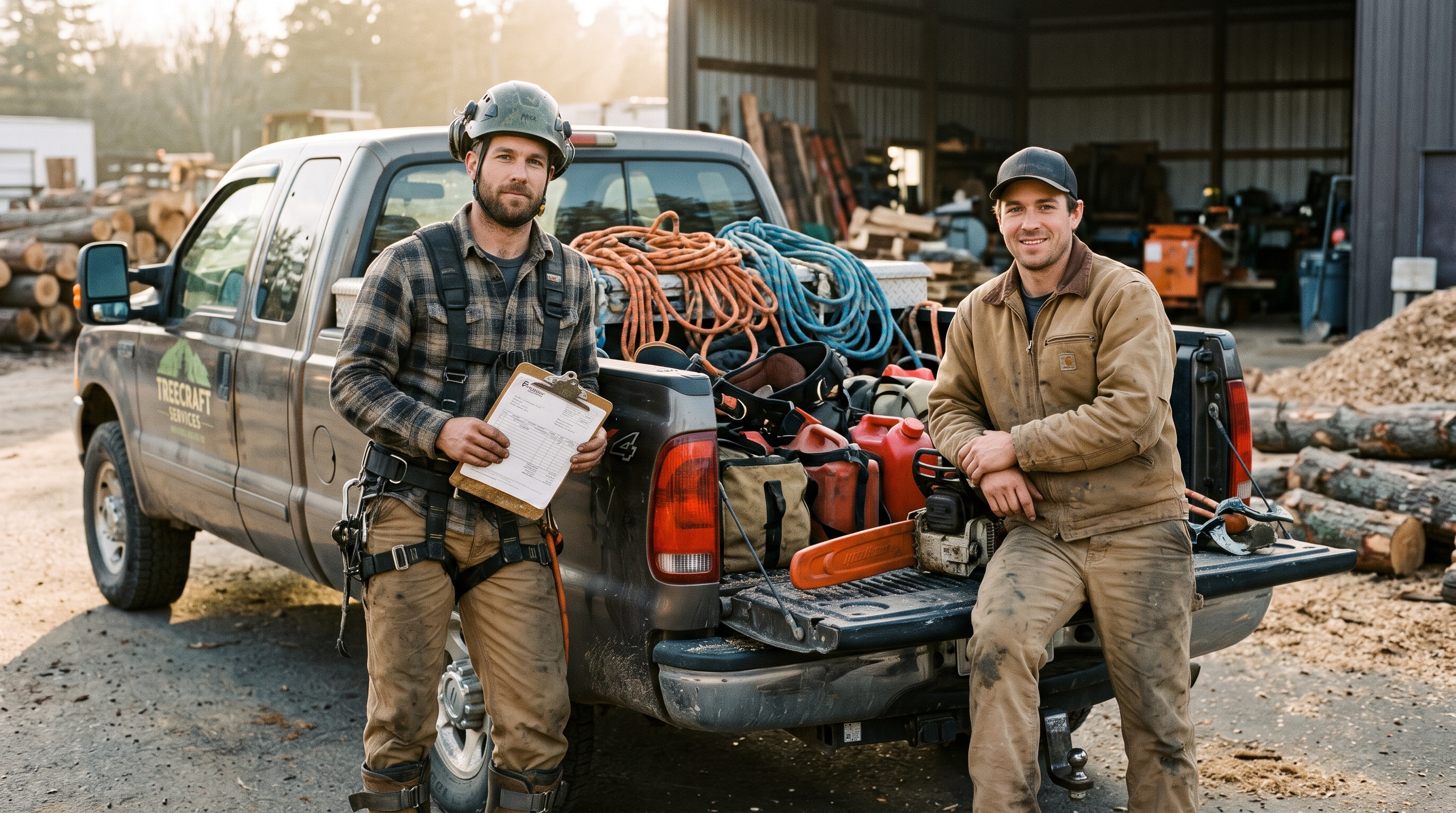
Most people who start a tree service do not come out of business school. They spend a few years dragging brush, learning how wood acts under tension, and watching an owner charge $3,000 to crane a dead pine out of a tight backyard. Eventually the arithmetic feels obvious: buy a saw, find an old three-quarter-ton truck, and keep the money for yourself.
The work itself is straightforward to understand, but the operational side catches people off guard. New tree services rarely fail because someone forgot how to notch a trunk. They fail because an insurer audits their payroll, an ungreased chipper bearing seizes during a storm rush, or an underbid takedown turns a four-hour job into three days of hand carrying logs.
Getting the legal setup, insurance, and equipment right from day one is what separates a short-lived side gig from a sustainable business.
Licenses and state requirements
You can buy a saw on Craigslist this morning, but working on other people's trees without the right legal structure puts everything you own at risk. When a limb swings the wrong way and crushes a neighbor's sunroom, a simple sole proprietorship means your personal savings and vehicle can be seized to pay for the damage.
Setting up a limited liability company (LLC) through your state is the baseline. Once the state approves the filing, get a federal Employer Identification Number from the IRS and open a business bank account. Pay for every gallon of bar oil, safety line, and dump fee from that account so your personal and business finances stay separated.
Licensing depends heavily on where you live. Some states have almost no specific requirements beyond a general business registration. Others treat tree care with the same scrutiny as electrical work or plumbing:
In states like Maryland, Connecticut, and New Jersey, you cannot legally advertise or perform tree care without a licensed tree expert on staff.
States on the West Coast, such as California and Washington, require specialty contractor licenses. In California, for example, you need a C-61 / D-49 Tree Service contractor license, which requires four years of documented journey-level experience and a surety bond.
Even in states with loose statewide rules, individual cities often enforce local permit laws. Cutting down a mature oak in a historic district without a municipal permit can bring stop-work orders and fines in the thousands of dollars. Before bidding jobs in any new town, call the local building or public works department and ask what they require from tree contractors.
Earning an ISA Certified Arborist credential through the International Society of Arboriculture is not strictly required in most jurisdictions, but it changes your business completely. Certified arborists can bid on municipal contracts, write hazard evaluations for insurance disputes, and routinely command higher rates than uncertified competitors.
The real cost of insurance
Insurance is typically your largest ongoing bill aside from payroll. Standard landscaping insurance does not protect you here. Most general liability policies for landscapers contain height exclusions that deny any claim for damage caused while working more than twelve or fifteen feet off the ground.
You need a policy written specifically for tree care:
| Policy type | Standard coverage limit | Typical annual cost |
|---|---|---|
| General liability | $1,000,000 occurrence / $2,000,000 aggregate | $2,800 to $6,500 |
| Workers' compensation (Code 0106) | Statutory limits | 18% to 35% of payroll |
| Commercial auto | $1,000,000 combined single limit | $2,400 to $4,800 per truck |
| Inland marine (tool and equipment floater) | $25,000 to $100,000 | $800 to $2,200 |
Workers' compensation under NCCI classification code 0106 covers tree pruning and removal. Because tree work is among the most hazardous occupations in the country, rates are steep. For every $100 you pay a climber or ground worker in wages, expect to pay between $18 and $35 in insurance premiums.
If you bring on subcontractors to climb or run ropes, collect a Certificate of Insurance showing active liability and workers' comp before they unload their gear. If their coverage has lapsed, your insurer will count their pay as employee wages during your end-of-year audit and send you a surprise bill for the difference.
Inland marine insurance covers the equipment that travels in your trailer. If a saw falls off a truck bed on the highway or your climbing ropes are stolen from a job site overnight, commercial auto will not cover them. Inland marine does.
Buying equipment without taking on dangerous debt
Financing a new diesel chipper and a bucket truck before having consistent weekly work is the easiest way to go broke. When your monthly equipment notes total $3,500, you are forced to take bad jobs at cheap rates just to make payments.
Build your fleet in stages as your revenue supports it.
Stage 1: The ground-level start ($12,000 to $25,000)
Most experienced owners started with a pickup, two good saws, and a utility trailer. This setup handles small to medium removals, basic deadwood pruning, and storm cleanups.
For saws, stick with commercial models from Stihl or Husqvarna. You need three basic sizes: a top-handle saw for climbing work, a 50cc to 60cc ground saw for general limbing and bucking, and a larger saw with a 28-inch or 32-inch bar for thick trunks.
Your climbing and rigging gear must meet ANSI Z133 safety standards. That means an arborist saddle, a steel-core flipline, static climbing lines, a port-a-wrap for controlling heavy drops, several arborist blocks, and rated bull ropes. Never use hardware store rope or cargo straps for rigging limbs over houses.
At this stage, you do not own a chipper. You will be loading brush by hand into a high-sided trailer and hauling it to a local green-waste dump. This is hard physical labor, but it keeps your overhead close to zero. You can save hours of loading time by offering homeowners a cut-and-leave option: you drop the tree and buck the wood into manageable sixteen-inch fireplace lengths, and they keep the firewood while handling the cleanup themselves.
Stage 2: The production setup ($40,000 to $75,000)
Once your schedule is booked two weeks out and manual brush loading becomes your bottleneck, buy a used commercial wood chipper. A twelve-inch drum or disc chipper turns three trailer loads of loose oak brush into a single pile of mulch in twenty minutes.
Pairing a chipper with a hydraulic dump trailer or a chip truck cuts your job turnaround time in half. You can bid full-service removals with complete yard cleanup, which homeowners prefer and pay much more for.
Stage 3: Adding heavy machinery ($90,000 and up)
The third phase is about saving your body and reducing crew size. A compact utility loader with a log grapple, such as a Ditch Witch SK800 or Vermeer mini skid steer, moves 1,000-pound trunk rounds across lawns on rubber tracks without rutting the grass. It does the physical work of three ground crew members and never pulls a muscle.
From there, operators look at self-propelled stump grinders, bucket trucks, or spider lifts that fit through backyard gates to reach tall canopies without spurring into the wood.
How to estimate and price tree jobs
Pricing by gut feel usually means working for minimum wage once fuel, equipment wear, and insurance are paid.
Every quote needs to cover your crew labor, a share of your monthly overhead, job-specific costs like landfill dump fees, and a clear profit margin. Dump fees alone can run between $40 and $95 per ton depending on the facility, and a mature maple easily generates multiple tons of green waste.
When you walk a property to estimate a removal, look closely at site access:
A sixty-foot pine in an open front yard takes a fraction of the time needed for the same tree behind a two-story home with a narrow gate, a septic drain field, delicate slate patios, and overhead service wires. Every obstacle that prevents dragging brush or requires roping pieces down one by one adds crew hours to the job.
Calculate the hours you expect the job to take, add your crew wages and machine run costs, tack on disposal fees, and apply a markup of 35% to 45% for business profit and emergency reserves.
Finding your initial clients
You cannot rely on word of mouth when you have zero past customers.
Set up a Google Business Profile under the tree service category. Take clear photos of your crew in safety gear, your trucks, and clean work sites. Ask your first five customers for detailed reviews describing how safely and cleanly you left their yards.
Introduce yourself to local landscaping and lawn care companies. Most lawn maintenance crews do not have the insurance, climbing equipment, or rigging skills to take down trees. Offer them a 10% referral fee for every removal job they send your way.
Put branded yard signs at the end of the street whenever you are working on a removal. Neighbors who hear chain saws and chippers will walk over to watch the work, and seeing a neat, professional crew makes them ask for an estimate on their own trees.
Connecting with property owners in your area
Keeping a crew paid and equipment working through seasonal weather shifts requires a steady flow of local estimates.
Contractors who maintain active liability insurance and professional standards can create a business profile on TreeRemovalNear.com to receive quote requests directly from residential and commercial property owners in their service counties.
Need a Verified Tree Removal Pro in Your City?
Avoid contract delays and unexpected pricing. Search our nationwide directory of licensed, highly-rated tree cutting and stump specialists with verified customer reviews.
Find Contractors Near You →