
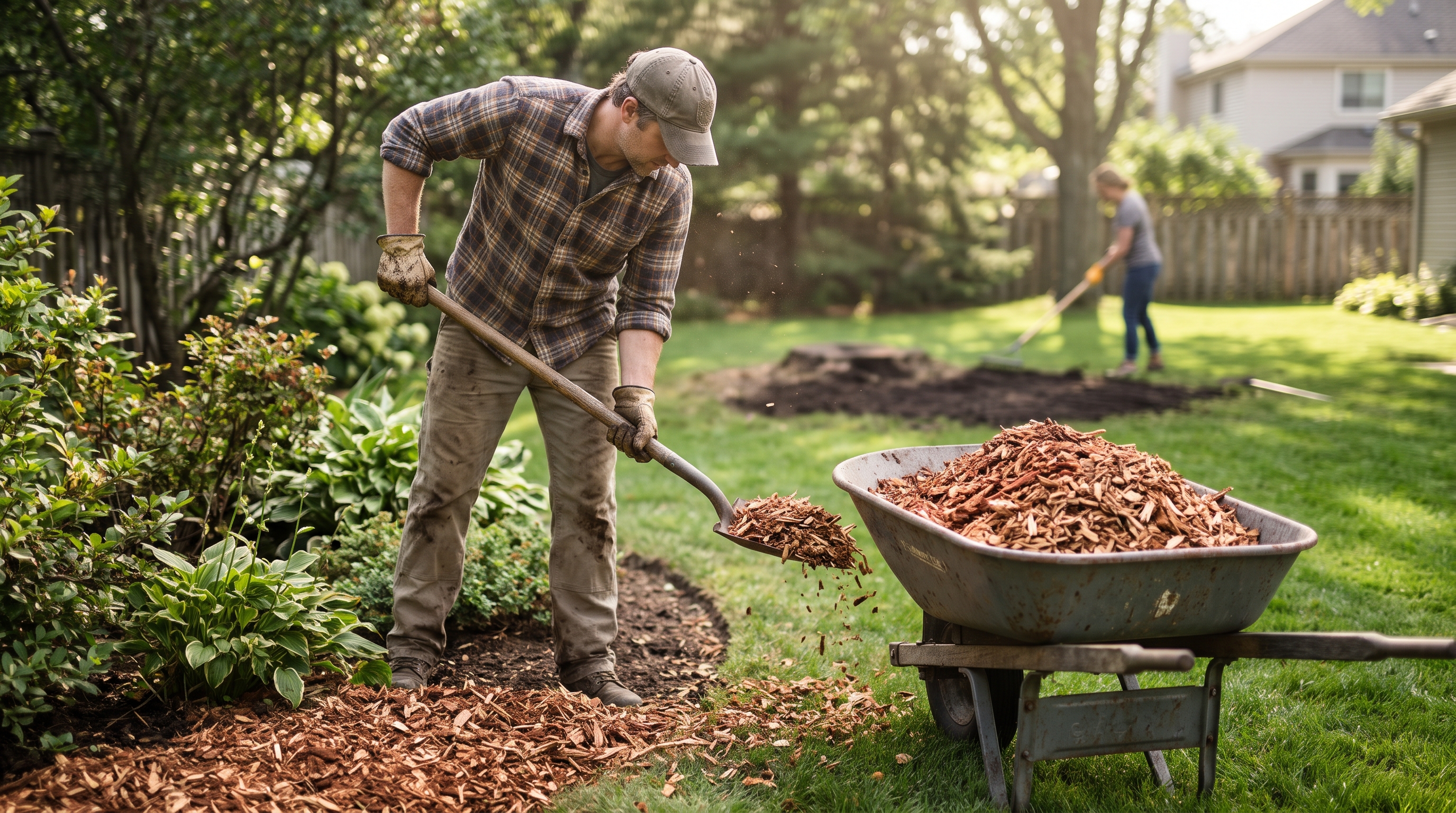
Once a crew finishes taking down a mature tree and grinding the stump, you are usually left with a crater and a massive pile of fresh wood chips mixed with soil. A sixty-foot tree easily produces multiple cubic yards of mulch and sawdust, enough to bury a flower bed or fill the bed of several pickup trucks.
Homeowners are often surprised by the sheer volume of debris left behind. You can have the tree service haul everything away, but that usually costs an extra fee. Keeping the chips can save money on store-bought landscaping mulch, provided you know how to use them without ruining your soil or inviting pests toward your foundation.
Here is what you need to know about repurposing wood chips, leveling the ground properly, and restoring your lawn.
The difference between clean wood chips and stump grindings
Not all wood residue from a tree job is the same. Recognizing which material you have determines where you can use it in your yard.
Whole-tree wood chips come from feeding limbs, twigs, and leaves through an industrial brush chipper. These chips are coarse, clean, and relatively uniform. They consist almost entirely of wood fiber and bark, making them great for decorative garden paths and landscaping beds.
Stump grindings are the material produced when a rotating carbide cutting wheel chews through the underground stump and root flare. This debris is an uneven mixture of fine sawdust, shredded wood slivers, dirt, and shredded turf. Because it contains so much raw soil, it decomposes faster than clean branch chips, but it also looks rougher and can harbor weed seeds kicked up during the grinding process.
Using wood chips as garden mulch without harming plants
Using fresh wood chips as surface mulch around established shrubs, fruit trees, and perennial beds is one of the most practical ways to repurpose tree debris. A layer of chips moderates soil temperature during summer heat, locks in moisture so you water less often, and forms a physical barrier that prevents weed seeds from germinating.
However, fresh wood creates a biological reaction in the ground that many gardeners do not expect.
Understanding nitrogen drawdown
Wood is made of carbon, while growing plants require nitrogen to produce healthy green foliage. When raw wood chips sit in contact with soil, millions of soil microbes begin breaking down the cellulose and lignin. To do that work, these microorganisms pull available nitrogen directly out of the surrounding dirt.
This temporary nitrogen tie-up only affects the top inch or two of soil where the wood directly touches the ground. Established trees and deep-rooted shrubs have root systems four to twelve inches below the surface, well beyond the reach of this nitrogen deficit, so they thrive under wood mulch.
Annual flowers, shallow-rooted perennials, and vegetable gardens are a different story. If you spread raw, uncomposted wood chips around tender seedlings, the nitrogen deficiency will cause their leaves to turn pale yellow and stunt their growth.
If you plan to use fresh chips in vegetable or flower beds, either let the pile age in a heap for three to six months until the wood turns dark brown, or scatter a high-nitrogen organic fertilizer over the soil before laying down the mulch.
Proper mulching depth and clearance
Spread your chips to a depth of roughly three inches across garden beds. Anything thinner than two inches allows weeds to push through, while piles deeper than four inches can trap excessive moisture, suffocate roots, and encourage fungus.
Keep the mulch at least four to six inches away from the trunks of living trees and woody shrubs. Piling wood chips directly against tree bark, commonly called a mulch volcano, traps continuous moisture against the trunk. This softens the outer bark and creates an open doorway for fungal cankers, rot, and boring insects.
Never pile wood chips against the exterior siding or foundation walls of your home. A thick, moist layer of organic mulch touching a sill plate or foundation creates an ideal moisture bridge for termites, carpenter ants, and moisture problems in basements. Maintain an open buffer zone of bare soil or gravel at least twelve inches wide along the foundation perimeter.
What to do if the removed tree was diseased
If your tree was taken down because of natural old age, wind damage, or crowding, its wood chips are completely safe to use across your yard.
If the tree had to be cut down due to a communicable fungal or bacterial infection, spreading those chips around other healthy plants is a mistake. Fungal diseases like oak wilt, Dutch elm disease, and armillaria root rot produce microscopic spores that survive in the shredded wood fibers. When you spread infected wood over other garden beds, rainfall washes those fungal pathogens into the soil around your surviving trees.
The same warning applies to aggressive insect infestations like the emerald ash borer or Asian longhorned beetle. When dealing with a tree condemned for pest or fungal contamination, pay the tree service to haul the chips to a commercial disposal site where high-heat industrial composting destroys the pathogens.
Leveling the crater left by stump grinding
When a tree service grinds a stump, they grind four to eight inches below grade. This leaves a gaping hole filled with a fluffy mound of sawdust and dirt that stands higher than the surrounding lawn.
Many homeowners simply rake this mound flat, expecting it to settle evenly. That leads to a frustrating problem twelve to eighteen months later.
Freshly ground wood contains pockets of trapped air and loose organic matter. As rain falls and bacteria rot the wood fibers underground, that material shrinks by more than half its original volume. If you leave the crater packed with pure wood grindings, the ground will slowly sink into a concave bowl, creating an uneven dip that collects standing water and scalps your mower blades.
To level the area permanently:
Use a garden shovel to dig out the bulk of the loose wood grindings from the crater until you reach the firm soil base, leaving only a thin scattering behind. You can move the excavated grindings to compost bins or use them on garden beds.
Fill the lower half of the hole with coarse sand or clean fill dirt, then pack it down firmly using your boots or a hand tamper.
Fill the remaining top four inches with screened topsoil mixed with a little compost. Mound the topsoil about one to two inches higher than the surrounding lawn grade to account for natural settling over the first few weeks of watering.
How to regrow grass over a removed stump site
You cannot throw grass seed or lay turf sod directly over a bed of wood chips and expect it to survive. Grass roots cannot establish in loose sawdust, and the nitrogen drawdown will starve young grass shoots before they establish an anchor.
Once you have backfilled the stump crater with clean topsoil as described above, give the soil a thorough soaking with a hose and let it settle for two or three days. If a depression appears, add another shovel of topsoil to bring it level with the lawn.
Scatter a starter fertilizer across the bare patch to give the upcoming roots a ready supply of phosphorus and nitrogen.
Spread a lawn seed blend that matches your existing turf, rake it lightly so the seeds sit roughly one-eighth of an inch under the dirt, and tamp the area lightly with the back of a rake to ensure good seed-to-soil contact.
Cover the seeded patch with a thin dusting of clean wheat straw to hold moisture and prevent birds from eating the seeds. Water the patch lightly twice a day to keep the top layer moist until the grass blades reach two inches in height.
If you prefer an instant repair, cut a roll of matching sod to fit the hole, press it firmly into the new topsoil so the edges match the surrounding lawn, and water deeply every day for the first two weeks until the sod roots take hold.
What tree removal companies do with leftover wood and chips
Homeowners often wonder where the tree goes when the company loads up their trucks and drives away.
Tree services handle debris based on the size and quality of the wood. Clean branch wood that goes through a commercial chipper is typically hauled to local municipal mulch facilities, commercial composting yards, or biomass energy plants where it is processed into colored garden mulch or boiler fuel.
Large straight trunk logs of hardwood species like oak, hickory, or walnut are sometimes sold to local firewood producers or portable sawmill operators, though urban yard trees often have little timber value due to hidden nails and embedded hardware.
When you hire a tree company, always clarify what is included in your written estimate. Some contractors include full stump grinding, chip removal, and raking in their standard bid, while others price stump grinding as an additional line item and leave the grindings piled on the lawn.
If you have a large removal coming up and want to compare what local contractors include in their cleanup packages, you can review licensed services in your area through the TreeRemovalNear.com directory to get clear, itemized quotes before work begins.
Need a Verified Tree Removal Pro in Your City?
Avoid contract delays and unexpected pricing. Search our nationwide directory of licensed, highly-rated tree cutting and stump specialists with verified customer reviews.
Find Contractors Near You →